COPD Diet: What to Eat, What to Avoid, Protein Needs & Meal Tips
.avif)

Living with COPD takes a lot of energy, often more than people realize. Simply breathing can burn extra calories, weaken muscles, and make it harder to keep weight on. That’s why diet and nutrition matter so much in COPD, not just for overall health, but for breathing strength, stamina, and day-to-day comfort. Research shows that up to 40% of individuals with moderate to severe COPD experience unintentional weight loss and muscle wasting, which can weaken breathing muscles, reduce exercise ability, and increase the risk of hospital stays. The right foods, meal timing, and protein intake can make a real difference.
In this guide, we’ll break down the best foods to include, what to avoid, how much you might need to eat, and practical tips you can use today, all based on current evidence and real-world COPD nutrition practice.
How Many Calories Do People with COPD Need?
Calorie needs in COPD are often higher than normal, even if activity levels are low. This surprises many patients. The reason is simple: breathing itself burns energy when the lungs are damaged.
In moderate to severe COPD, people may burn 10–15% more calories at rest compared to someone without lung disease. If intake doesn’t match this demand, the body starts breaking down muscle, including the muscles needed to breathe.
Underweight or losing weight: Higher-calorie intake is critical
Normal weight: Calories should maintain weight and muscle
Overweight: Weight loss should be slow and supervised
Aggressive dieting can worsen breathlessness and weakness. Even unintentional weight loss in COPD is a red flag. Research consistently shows that low body weight and muscle loss are linked to worse outcomes and higher mortality in COPD, especially in advanced stages.
Protein Needs of COPD Patients
In COPD, muscle loss doesn’t just affect the arms and legs, it can weaken the respiratory muscles, making breathing feel harder over time.
For many people with COPD, protein needs are higher than average, especially if they are losing weight, feeling weak, or participating in pulmonary rehabilitation.
According to experts, if you’re undernourished, aim for 35–45 kcal/kg/day and ~1.2–1.5 g protein/kg/day while rebuilding weight and muscle. You can adjust this with your clinician.
COPD-friendly protein sources include:
- Eggs, yogurt, milk, and cheese
- Fish and lean poultry
- Soft beans or lentils (if tolerated)
- Nut butters and protein-enriched smoothies for low appetite days
If chewing or large meals worsen breathlessness, softer foods and liquids can help meet protein needs without increasing breathing effort.
Foods That Help vs Foods That Can Worsen COPD
Not all foods affect breathing the same way. Some choices support energy and muscle, while others can make breathlessness, bloating, or coughing worse, especially after meals.
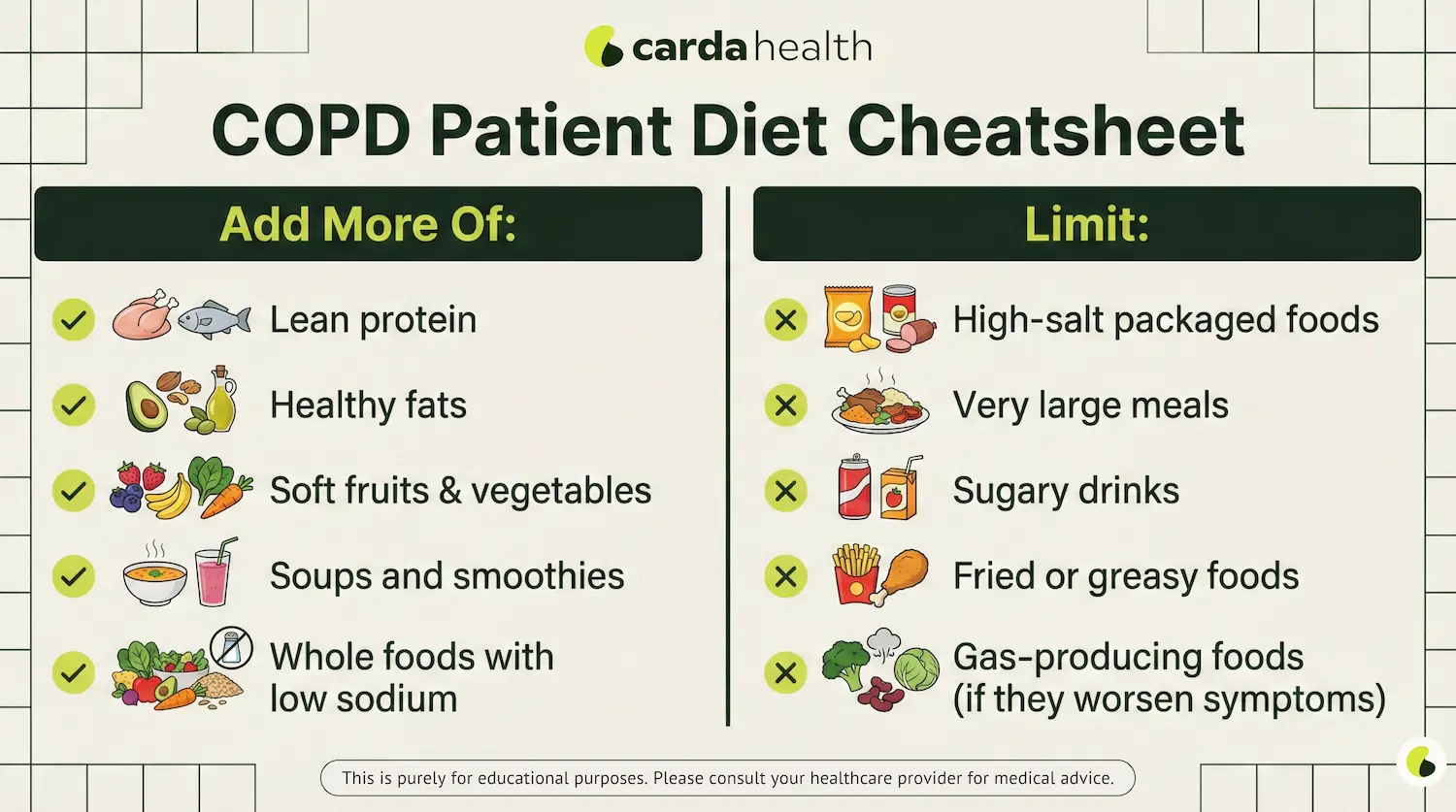
Foods That Often Help Breathing for COPD Patients
These foods are easier to digest, support muscle, and don’t increase breathing effort as much:
- Lean proteins: eggs, fish, chicken, yogurt
- Healthy fats: olive oil, avocado, nut butters (calorie-dense without large portions)
- Soft fruits and vegetables: bananas, berries, cooked carrots, squash
- Whole grains (in moderate portions): oats, rice, quinoa
- Fluids: water, soups, smoothies to keep mucus thinner
Healthy fats are especially useful if your appetite is low, because they provide calories without a large meal volume.
Worst Foods for COPD Patients
These don’t affect everyone the same way, but many COPD patients notice worsening symptoms with:
- Large, heavy meals (increase pressure on the diaphragm)
- Gas-producing foods: beans, cabbage, onions, carbonated drinks
- Very salty foods: can worsen fluid retention and swelling
- Highly processed foods: often low in nutrients and harder to digest
- Very cold or very spicy foods: may trigger coughing in some people
A simple strategy is to eat smaller meals more often and pay attention to how your breathing feels 30–60 minutes after eating.
{{get-started}}
Meal Timing & Eating Tips to Reduce Breathlessness
For many people with COPD, how you eat matters just as much as what you eat. Large meals can press upward on the diaphragm, making breathing feel tighter and more uncomfortable.
These strategies are commonly recommended in pulmonary and nutrition clinics:
Eat smaller meals more often: Aim for 4–6 smaller meals instead of 2–3 large ones. This reduces stomach fullness and eases pressure on the lungs.
Eat when breathing feels best: Many people breathe better in the morning or after medications. Try to schedule larger meals during those windows.
Rest before meals: Sitting and catching your breath for 20–30 minutes before eating can reduce fatigue while chewing and swallowing.
Sit upright while eating: This allows the lungs to expand more fully and reduces reflux and coughing.
Take your time: Eating slowly, chewing well, and pausing between bites can prevent breathlessness during meals.
Use oxygen if prescribed: If you’re on oxygen therapy, doctors often recommend using it during meals to reduce shortness of breath.
If cooking feels exhausting, ready-to-eat meals, meal delivery, or batch cooking on “good breathing days” can help maintain nutrition without daily strain.
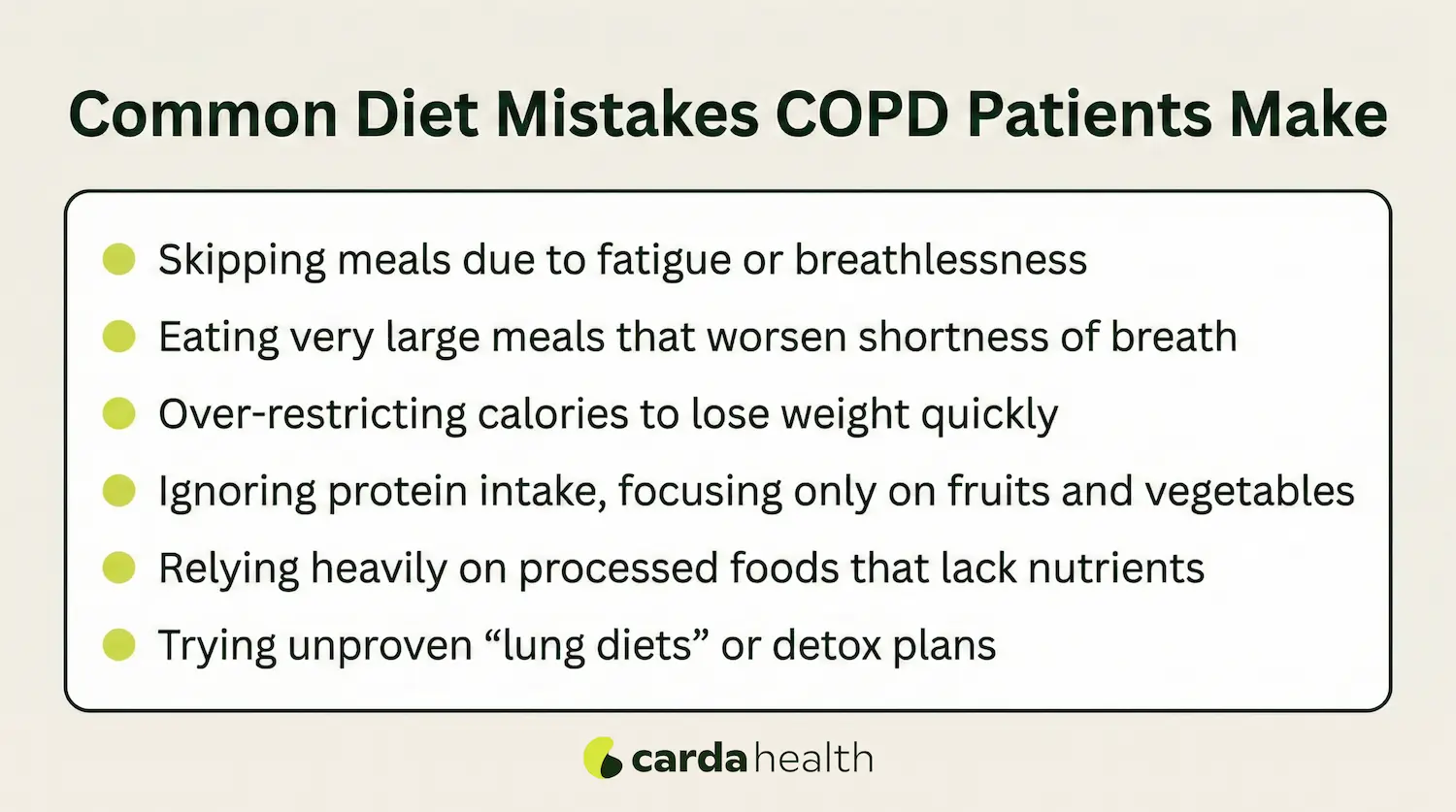
Common Diet Mistakes That Can Worsen COPD Symptoms
Even with good intentions, some eating habits can unintentionally make breathing harder or lead to muscle loss over time. Being aware of these common mistakes can help you adjust your routine in small, practical ways that better support your lungs and energy levels.
Hydration for Mucus and Breathing Comfort
Staying well hydrated is one of the simplest, and most overlooked, parts of a COPD-friendly diet. When the body doesn’t get enough fluids, mucus in the airways can become thicker and harder to clear, which may worsen coughing, chest congestion, and shortness of breath. Adequate hydration helps thin airway mucus so it’s easier to cough up, reduces throat irritation and dry mouth (common with inhalers and oxygen), and supports overall energy and digestion.
Water is best, but soups, broths, smoothies, milk, and herbal teas also count toward fluid intake. Some people find warm fluids especially soothing for cough and chest tightness.
That said, not every fluid is good for COPD. Limit excess caffeine if it worsens anxiety or sleep, and avoid sugary drinks that add calories without nutrition. If you have heart failure or fluid restrictions, follow your doctor’s guidance on daily fluid limits.
Hydration won’t cure COPD, but many patients notice that breathing feels less “sticky” and strained when fluids are consistent throughout the day.
Also Read: Tips to manage COPD at home.
Vitamins & Supplements: What Helps and What to Be Careful With
Many people with COPD ask about supplements, but this is an area where more is not always better. Some nutrients matter for lung and muscle health, while others offer little benefit unless there’s a deficiency.
Vitamin D: Low levels are common in COPD and have been linked to weaker muscles and more frequent flare-ups. Supplementation may help if deficient, but it’s not a treatment on its own.
Calcium: Important for muscle function and bone health, especially for people using long-term steroids.
Magnesium: Supports muscle relaxation and may help with fatigue in some people.
Protein supplements: Useful if appetite is poor or weight loss is ongoing.
Use caution with high-dose antioxidants or “lung detox” supplements, and herbal supplements that can interact with inhalers, steroids, or heart medications. Supplements should never replace food. They work best when used to fill real gaps, ideally after discussing blood levels or symptoms with a clinician.
Nutrition Goals Based on Your COPD Symptoms
COPD affects people differently. Some struggle with weight loss and muscle weakness. Others deal with bloating, fatigue, or swelling due to heart issues. Adjusting your nutrition based on what you’re experiencing can make daily breathing and energy levels more manageable.
Diet Considerations by COPD Stage
Nutrition needs can shift as COPD progresses. While every person is different, patterns are common.
Early-stage COPD
- Focus on balanced nutrition and preventing weight loss
- Maintain muscle through adequate protein
- Avoid restrictive dieting that could weaken breathing muscles
Moderate COPD
- Higher calorie and protein needs often emerge
- Smaller, more frequent meals become more important
- Nutrition supports exercise tolerance and rehab progress
Advanced COPD
- Weight loss and muscle wasting become more common
- Calorie-dense, easy-to-eat foods are critical
- Soft foods, liquids, and nutrition shakes may be needed
- Malnutrition at this stage is linked to worse outcomes and higher hospitalization risk
{{get-started}}
Special Situations
COPD + Heart Failure: Balancing Salt & Fluids
When COPD and heart failure occur together, nutrition needs extra balance. Too much salt can worsen fluid retention, swelling, and shortness of breath. Many people in this situation are advised to limit sodium, avoid heavily processed foods, and spread fluids evenly across the day rather than drinking large amounts at once. Fluid limits (if prescribed) should always come from your care team, as needs vary based on heart function and medications.
Difficulty Swallowing or Fatigue While Eating
Some people with COPD struggle with chewing or swallowing, especially during flare-ups or advanced disease. In these cases, texture-modified foods can help. Soft foods, moist meals, soups, smoothies, and nutrition shakes make it easier to eat without worsening breathlessness. Smaller bites and slower pacing also reduce fatigue while eating.
Diabetes + COPD: Balancing Carbohydrates and Steroids
COPD and diabetes often overlap, particularly in people who use steroid medications. Steroids can raise blood sugar levels, making carb balance more important. The goal is steady, consistent carbohydrates paired with protein, rather than large carb-heavy meals. Avoid skipping meals, as this can worsen both blood sugar swings and muscle loss.
Conclusion
Eating well with COPD isn’t about following a strict diet or cutting out everything you enjoy. It’s about supporting your breathing, protecting muscle strength, and making daily life a little easier. The right balance of calories, protein, fluids, and meal timing can reduce fatigue, help you stay stronger, and support better symptom control at every stage of COPD. Small, consistent changes often make the biggest difference over time.
If breathing, fatigue, or weight changes are affecting your daily life, you don’t have to manage it alone. Carda Health’s virtual pulmonary rehabilitation program helps people with COPD build strength, improve breathing, and develop routines that work at home — including guidance on nutrition, activity, and symptom management.
FAQs
What is the best diet for someone with COPD?
There is no single “COPD diet,” but most people benefit from adequate calories, enough protein, healthy fats, and smaller frequent meals. The goal is to prevent muscle loss, reduce breathlessness after eating, and support overall energy rather than follow restrictive food rules.
Should people with COPD eat more or less calories?
Many people with COPD actually need more calories than expected, because breathing burns extra energy. Unintentional weight loss is common and linked to worse outcomes. Calorie needs vary by body weight, disease stage, and activity level, so intake should be individualized.
What foods should people with COPD avoid?
Foods that commonly worsen symptoms include very large meals, high-salt processed foods, sugary drinks, and gas-producing foods if they increase bloating or breathlessness. These don’t affect everyone the same way, so personal tolerance matters.
Is protein important for COPD?
Yes. Protein helps preserve muscle, including the muscles used for breathing. Low protein intake is associated with weakness, poor exercise tolerance, and slower recovery from flare-ups. Most people with COPD benefit from including protein at every meal.
Can diet help reduce COPD flare-ups?
Diet alone can’t prevent flare-ups, but good nutrition supports immune function, muscle strength, and recovery, which may reduce severity and frequency over time. Poor nutrition is linked to higher hospitalization risk in COPD.
Do people with COPD need supplements?
Supplements are not routinely required. Vitamin D, calcium, or protein supplements may help in specific situations, especially if deficiencies or weight loss are present. Supplements should support, not replace, a balanced diet and should be discussed with a healthcare provider.
References
https://pmc.ncbi.nlm.nih.gov/articles/PMC6831917/
https://pmc.ncbi.nlm.nih.gov/articles/PMC11762775/
https://www.mdpi.com/2072-6643/17/7/1149
https://health.clevelandclinic.org/copd-diet
https://www.lung.org/lung-health-diseases/lung-disease-lookup/copd/living-with-copd/nutrition